BL21 (DE3) pLysS Chemically Competent E. coli Cells

Description

GoldBio’s BL21(DE3)pLysS Chemically Competent E. coli Cells provide tight control of T7 promoter-driven gene expression. This makes them ideal for expressing toxic or unstable recombinant proteins. 

These cells carry a chromosomal T7 RNA polymerase gene under IPTG-inducible control. They also contain a pLysS plasmid that expresses T7 lysozyme. This suppresses basal expression and allows for precise regulation before induction.

They're compatible with standard heat-shock protocols, making them a reliable host for protein expression, cloning, and co-expression studies.


BL21 (DE3) pLysS chemically competent cells are free of animal-derived products and grown with animal-free media.


Kit Components

  • Competent Cells
  • 1 x 12 mL Recovery Media
  • 1 x 10 µL Control Plasmid (pUC19 Control, 500 pg/µL)

Reagents Needed for One Reaction

  • BL21 (DE3) pLysS chemically competent cells: 50 µL
  • DNA (or pUC19 Control, 500 pg/µL): 2 µL
  • Recovery medium: 1 mL

Storage/Handling

This product may be shipped on dry ice. BL21 (DE3) pLysS Chemically Competent E. coli cells should be stored at -80°C, pUC19 Control DNA should be stored at -20°C and recovery medium should be stored at 4°C immediately upon arrival. When stored under the recommended conditions and handled correctly, these products should be stable for at least 1 year from the date of receipt.

Genomic Features

  •  ≥4 × 10⁷ cfu/µg efficiency
  • Widely used host background
  • T7 expression strain
  • Contains pLysS plasmid expressing T7 lysozyme to reduce basal (leaky) expression
  • Chloramphenicol resistant (for pLysS plasmid maintenance)
  • Deficient in both lon and ompT proteases
  • Resistant to phage T1 (fhuA2)
  • B strain

Genotype

F ompT hsdSB(rB mB) gal dcm (DE3) pLysS (CamR)

Functional Highlights and Mechanism

·         Controlled T7 Expression System: BL21(DE3)pLysS cells carry a chromosomal DE3 lysogen encoding T7 RNA polymerase under lacUV5 control. This system enables IPTG-inducible transcription of genes cloned downstream of T7 promoters.

·         pLysS-Mediated Basal Suppression: The pLysS plasmid constitutively expresses low levels of T7 lysozyme, which binds to and inhibits T7 RNA polymerase. This inhibits transcriptional activity in the absence of induction, reducing leaky expression that can be toxic to the host.

·         High Transformation Efficiency: Chemically competent preparation ensures reliable uptake of plasmid DNA, including large or low-copy T7 vectors, using standard heat-shock protocols.

·         Protease and Endonuclease Deficiency: The ompT and hsdSB mutations reduce degradation of heterologous proteins and plasmid DNA, respectively, preserving protein integrity and plasmid stability during expression and cloning.


Recommended Applications and Usage Notes

Recommended Applications

Expression of Toxic or Unstable Recombinant Proteins
Ideal for proteins that impair host viability when expressed under leaky systems.

Inducible Expression of Tagged Proteins
Suitable for 6xHis, GST, or MBP fusion proteins in IPTG-inducible T7 systems.

Plasmid Screening and Optimization Studies
Useful in testing different expression constructs for yield, solubility, and activity.

Dual Expression or Co-expression of Multi-Subunit Proteins
Compatible with dual-plasmid setups when using vectors with compatible origins and resistance markers.

Suppressed Background Expression for Library Screening
Reduces false positives caused by uninduced expression in screening experiments.


Usage Tips and Considerations

Maintain Chloramphenicol Selection
Always grow cells in medium containing chloramphenicol (25 µg/ml) to retain the pLysS plasmid.

Avoid Overgrowth Before Induction
Induce at mid-log phase (OD600 ~0.4–0.6) to maximize expression and minimize stress on the host.

Lower Expression Temperature for Soluble Proteins
Consider inducing at 16–25°C to improve solubility and reduce aggregation of challenging proteins.

Use Freshly Prepared IPTG
Ensure IPTG is fresh and stored properly to maintain consistent induction across experiments.

Aliquot Cells Upon Receipt
Minimize freeze-thaw cycles by aliquoting single-use portions and storing at –80°C.

Test Expression Gradually
Start with small-scale expressions (2–10 ml) to determine optimal IPTG concentration (commonly 0.1–1 mM).

Common Research Applications

(Click each for more information)

Tightly Regulated Expression of Toxic Recombinant Proteins
  • Purpose: To reduce leaky expression of proteins that are toxic to E. coli prior to induction.
  • How It Works: The pLysS plasmid expresses T7 lysozyme, which binds to and inhibits T7 RNA polymerase. This suppresses basal transcription from the T7 promoter until induction with IPTG.
  • Applications: Expression of antimicrobial peptides, proteases, membrane proteins, or other unstable products.

Studier, F. W. (1991). Use of bacteriophage T7 lysozyme to improve an inducible T7 expression system. Journal of Molecular Biology, 219(1), 37–44. https://doi.org/10.1016/0022-2836(91)90855-Z

High-Level Recombinant Protein Expression Using T7 Promoter Systems
  • Purpose: To produce large amounts of recombinant protein under IPTG induction.
  • How It Works: BL21(DE3)pLysS contains a chromosomal copy of the T7 RNA polymerase gene under lacUV5 control. Upon IPTG addition, T7 polymerase is produced and drives transcription of T7 promoter-controlled genes on the expression plasmid.
  • Applications: Protein purification, enzyme assays, structural biology.

Studier, F. W., & Moffatt, B. A. (1986). Use of bacteriophage T7 RNA polymerase to direct selective high-level expression of cloned genes. Journal of Molecular Biology, 189(1), 113–130. https://doi.org/10.1016/0022-2836(86)90385-2

Minimized Background Expression in Protein Optimization Workflows
  • Purpose: To optimize expression conditions (e.g., temperature, induction time, plasmid design) for improved protein yield and solubility.
  • How It Works: The presence of pLysS improves experiment reproducibility by reducing unintended basal expression of the target gene, allowing for cleaner optimization.
  • Applications: Protein solubility screening, mutant library expression, tagged protein system trials.

Sørensen, H. P., & Mortensen, K. K. (2005). Soluble expression of recombinant proteins in the cytoplasm of Escherichia coli. Microbial Cell Factories, 4, 1. https://doi.org/10.1186/1475-2859-4-1
Grossman, T. H., Kawasaki, E. S., Punreddy, S. R., & Osburne, M. S. (1998). Spontaneous cAMP-dependent derepression of gene expression in stationary phase plays a role in recombinant expression instability. Gene, 209(1–2), 95–103.

Efficient Cloning and Transformation of T7-Based Expression Plasmids
  • Purpose: To serve as a host strain for transformation and propagation of T7 expression vectors.
  • How It Works: These cells are chemically competent, allowing for rapid uptake of plasmid DNA, including high-copy or inducible expression plasmids.
  • Applications: Plasmid construction, site-directed mutagenesis, library transformation.


Quality Control

Transformation efficiency is tested by using the pUC19 control DNA supplied with the kit and using the protocol given below. Transformation efficiency should be ≥4 x 10⁷ CFU/µg pUC19 DNA. Untransformed cells are tested for appropriate antibiotic sensitivity.

General Guidelines

  • Handle competent cells gently as they are highly sensitive to changes in temperature or mechanical lysis caused by pipetting.
  • Thaw competent cells on ice and transform cells immediately following thawing. After adding DNA, mix by tapping the tube gently. Do not mix cells by pipetting or vortexing.


Calculation of Transformation Efficiency

Transformation Efficiency (TE) is defined as the number of colony forming units (cfu) produced by transforming 1 µg of plasmid into a given volume of competent cells.

  • TE = Colonies/µg/Dilution
    • Colonies = the number of colonies counted
    • µg = amount of DNA transformed in µg
    • Dilution = total dilution of the DNA before plating

Example: Transform 1 µl of (10 pg/µl) control plasmid into 25 µl of cells, add 975 µl of Recovery Medium. Dilute 10 µl of this in 990 µl of Recovery Medium and plate 50 µl. Count the colonies on the plate the next day. If you count 250 colonies, the TE is calculated as follows:

Colonies = 250
µg of DNA = 0.00001
Dilution = 10/1000 x 50/1000 = 0.0005
TE = 250/0.00001/0.0005 = 5.0 × 10¹⁰
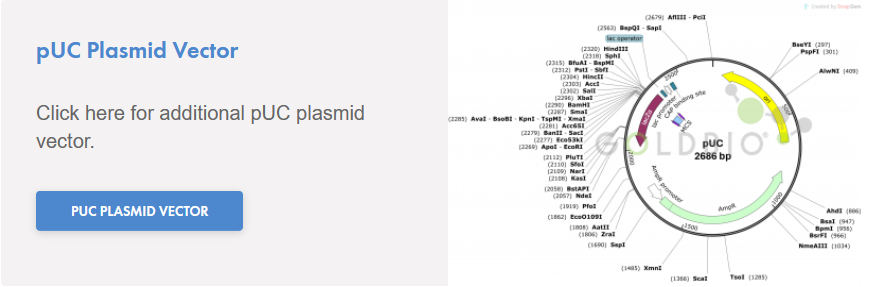
 

pUC Plasmid Vector


BL21 (DE3) pLysS Chemically Competent E. coli Cells

View Sizes & Pricing

Catalog Number:
CC-123-5x50
CAS Number:
$61.00

Availability:
In stock
Shipping:
Shipping calculated at checkout

    Description

    GoldBio’s BL21(DE3)pLysS Chemically Competent E. coli Cells provide tight control of T7 promoter-driven gene expression. This makes them ideal for expressing toxic or unstable recombinant proteins. 

    These cells carry a chromosomal T7 RNA polymerase gene under IPTG-inducible control. They also contain a pLysS plasmid that expresses T7 lysozyme. This suppresses basal expression and allows for precise regulation before induction.

    They're compatible with standard heat-shock protocols, making them a reliable host for protein expression, cloning, and co-expression studies.


    BL21 (DE3) pLysS chemically competent cells are free of animal-derived products and grown with animal-free media.


    Kit Components

    • Competent Cells
    • 1 x 12 mL Recovery Media
    • 1 x 10 µL Control Plasmid (pUC19 Control, 500 pg/µL)

    Reagents Needed for One Reaction

    • BL21 (DE3) pLysS chemically competent cells: 50 µL
    • DNA (or pUC19 Control, 500 pg/µL): 2 µL
    • Recovery medium: 1 mL

    Storage/Handling

    This product may be shipped on dry ice. BL21 (DE3) pLysS Chemically Competent E. coli cells should be stored at -80°C, pUC19 Control DNA should be stored at -20°C and recovery medium should be stored at 4°C immediately upon arrival. When stored under the recommended conditions and handled correctly, these products should be stable for at least 1 year from the date of receipt.

    Genomic Features

    •  ≥4 × 10⁷ cfu/µg efficiency
    • Widely used host background
    • T7 expression strain
    • Contains pLysS plasmid expressing T7 lysozyme to reduce basal (leaky) expression
    • Chloramphenicol resistant (for pLysS plasmid maintenance)
    • Deficient in both lon and ompT proteases
    • Resistant to phage T1 (fhuA2)
    • B strain

    Genotype

    F ompT hsdSB(rB mB) gal dcm (DE3) pLysS (CamR)

    Functional Highlights and Mechanism

    ·         Controlled T7 Expression System: BL21(DE3)pLysS cells carry a chromosomal DE3 lysogen encoding T7 RNA polymerase under lacUV5 control. This system enables IPTG-inducible transcription of genes cloned downstream of T7 promoters.

    ·         pLysS-Mediated Basal Suppression: The pLysS plasmid constitutively expresses low levels of T7 lysozyme, which binds to and inhibits T7 RNA polymerase. This inhibits transcriptional activity in the absence of induction, reducing leaky expression that can be toxic to the host.

    ·         High Transformation Efficiency: Chemically competent preparation ensures reliable uptake of plasmid DNA, including large or low-copy T7 vectors, using standard heat-shock protocols.

    ·         Protease and Endonuclease Deficiency: The ompT and hsdSB mutations reduce degradation of heterologous proteins and plasmid DNA, respectively, preserving protein integrity and plasmid stability during expression and cloning.


    Recommended Applications and Usage Notes

    Recommended Applications

    Expression of Toxic or Unstable Recombinant Proteins
    Ideal for proteins that impair host viability when expressed under leaky systems.

    Inducible Expression of Tagged Proteins
    Suitable for 6xHis, GST, or MBP fusion proteins in IPTG-inducible T7 systems.

    Plasmid Screening and Optimization Studies
    Useful in testing different expression constructs for yield, solubility, and activity.

    Dual Expression or Co-expression of Multi-Subunit Proteins
    Compatible with dual-plasmid setups when using vectors with compatible origins and resistance markers.

    Suppressed Background Expression for Library Screening
    Reduces false positives caused by uninduced expression in screening experiments.


    Usage Tips and Considerations

    Maintain Chloramphenicol Selection
    Always grow cells in medium containing chloramphenicol (25 µg/ml) to retain the pLysS plasmid.

    Avoid Overgrowth Before Induction
    Induce at mid-log phase (OD600 ~0.4–0.6) to maximize expression and minimize stress on the host.

    Lower Expression Temperature for Soluble Proteins
    Consider inducing at 16–25°C to improve solubility and reduce aggregation of challenging proteins.

    Use Freshly Prepared IPTG
    Ensure IPTG is fresh and stored properly to maintain consistent induction across experiments.

    Aliquot Cells Upon Receipt
    Minimize freeze-thaw cycles by aliquoting single-use portions and storing at –80°C.

    Test Expression Gradually
    Start with small-scale expressions (2–10 ml) to determine optimal IPTG concentration (commonly 0.1–1 mM).

    Common Research Applications

    (Click each for more information)

    Tightly Regulated Expression of Toxic Recombinant Proteins
    • Purpose: To reduce leaky expression of proteins that are toxic to E. coli prior to induction.
    • How It Works: The pLysS plasmid expresses T7 lysozyme, which binds to and inhibits T7 RNA polymerase. This suppresses basal transcription from the T7 promoter until induction with IPTG.
    • Applications: Expression of antimicrobial peptides, proteases, membrane proteins, or other unstable products.

    Studier, F. W. (1991). Use of bacteriophage T7 lysozyme to improve an inducible T7 expression system. Journal of Molecular Biology, 219(1), 37–44. https://doi.org/10.1016/0022-2836(91)90855-Z

    High-Level Recombinant Protein Expression Using T7 Promoter Systems
    • Purpose: To produce large amounts of recombinant protein under IPTG induction.
    • How It Works: BL21(DE3)pLysS contains a chromosomal copy of the T7 RNA polymerase gene under lacUV5 control. Upon IPTG addition, T7 polymerase is produced and drives transcription of T7 promoter-controlled genes on the expression plasmid.
    • Applications: Protein purification, enzyme assays, structural biology.

    Studier, F. W., & Moffatt, B. A. (1986). Use of bacteriophage T7 RNA polymerase to direct selective high-level expression of cloned genes. Journal of Molecular Biology, 189(1), 113–130. https://doi.org/10.1016/0022-2836(86)90385-2

    Minimized Background Expression in Protein Optimization Workflows
    • Purpose: To optimize expression conditions (e.g., temperature, induction time, plasmid design) for improved protein yield and solubility.
    • How It Works: The presence of pLysS improves experiment reproducibility by reducing unintended basal expression of the target gene, allowing for cleaner optimization.
    • Applications: Protein solubility screening, mutant library expression, tagged protein system trials.

    Sørensen, H. P., & Mortensen, K. K. (2005). Soluble expression of recombinant proteins in the cytoplasm of Escherichia coli. Microbial Cell Factories, 4, 1. https://doi.org/10.1186/1475-2859-4-1
    Grossman, T. H., Kawasaki, E. S., Punreddy, S. R., & Osburne, M. S. (1998). Spontaneous cAMP-dependent derepression of gene expression in stationary phase plays a role in recombinant expression instability. Gene, 209(1–2), 95–103.

    Efficient Cloning and Transformation of T7-Based Expression Plasmids
    • Purpose: To serve as a host strain for transformation and propagation of T7 expression vectors.
    • How It Works: These cells are chemically competent, allowing for rapid uptake of plasmid DNA, including high-copy or inducible expression plasmids.
    • Applications: Plasmid construction, site-directed mutagenesis, library transformation.


    Quality Control

    Transformation efficiency is tested by using the pUC19 control DNA supplied with the kit and using the protocol given below. Transformation efficiency should be ≥4 x 10⁷ CFU/µg pUC19 DNA. Untransformed cells are tested for appropriate antibiotic sensitivity.

    General Guidelines

    • Handle competent cells gently as they are highly sensitive to changes in temperature or mechanical lysis caused by pipetting.
    • Thaw competent cells on ice and transform cells immediately following thawing. After adding DNA, mix by tapping the tube gently. Do not mix cells by pipetting or vortexing.


    Calculation of Transformation Efficiency

    Transformation Efficiency (TE) is defined as the number of colony forming units (cfu) produced by transforming 1 µg of plasmid into a given volume of competent cells.

    • TE = Colonies/µg/Dilution
      • Colonies = the number of colonies counted
      • µg = amount of DNA transformed in µg
      • Dilution = total dilution of the DNA before plating

    Example: Transform 1 µl of (10 pg/µl) control plasmid into 25 µl of cells, add 975 µl of Recovery Medium. Dilute 10 µl of this in 990 µl of Recovery Medium and plate 50 µl. Count the colonies on the plate the next day. If you count 250 colonies, the TE is calculated as follows:

    Colonies = 250
    µg of DNA = 0.00001
    Dilution = 10/1000 x 50/1000 = 0.0005
    TE = 250/0.00001/0.0005 = 5.0 × 10¹⁰


    pUC Plasmid Vector


    Product Specifications

    Catalog ID: CC-123
    Storage/handling: Store Competent Cells at -80°C.

    Login

    Forgot your password?

    Don't have an account yet?
    Create account